
What Causes Gout Flare, Symptoms and Treatment | CHI Health
Gout happens when urate builds up in the body and forms crystals in a joint. A gout flare can cause sudden, severe pain, swelling, warmth and tenderness. Treatment can help settle the pain, while longer-term care can help keep urate levels under control and reduce future attacks. At Complete Healthcare International (CHI), our GP clinic in Orchard can assess your symptoms and guide you on the right treatment.
What Causes Gout and Gout Flares?

Gout develops when there is too much urate in the body. Over time, crystals can collect in and around a joint and cause inflammation.
Why Does Gout Happen?
Your body makes uric acid when it breaks down purines. The kidneys normally remove it through urine. Gout can develop when the body makes too much urate, or the kidneys do not remove enough.
Family history, kidney problems, certain medicines and some health conditions can also make gout more likely.
What Can Trigger a Gout Flare?
Some things can make a flare more likely. Alcohol, red meat, seafood and drinks with high amounts of fructose have been linked with a higher risk of gout.
That does not mean everyone with gout has the same triggers. Food is only one part of the picture, so it is not useful to assume that one particular meal is always responsible for an attack.
What Are the Symptoms of Gout?
A gout flare often starts suddenly. The joint may become extremely painful, swollen, warm and tender. The big toe is commonly affected, although gout can also occur in the ankle, knee, foot, wrist, fingers or elbow.
What Does a Gout Flare Feel Like?
The pain can be severe enough to make walking or sleeping difficult. Even touching the joint may hurt.
You may also notice that the skin around the joint looks red or feels warmer than usual. Movement can become difficult once the swelling starts.
Which Joints Can Gout Affect?
Gout is often associated with the big toe, but it is not limited to that joint. The ankle, knee, foot, wrist, fingers and elbow can also be affected.
With repeated attacks, some people develop tophi. These are lumps formed by deposits of urate crystals, usually around joints or under the skin.
What Are the Common Signs of Gout?
Some of the things people notice during an attack include:
- Sudden, strong joint pain
- Swelling around the joint
- Red or warm skin
- Pain when the area is touched
- Trouble moving the joint
- Pain that starts or gets worse at night
A swollen and painful joint does not automatically mean gout. Other conditions can cause similar symptoms.
How Is Gout Diagnosed and Treated?
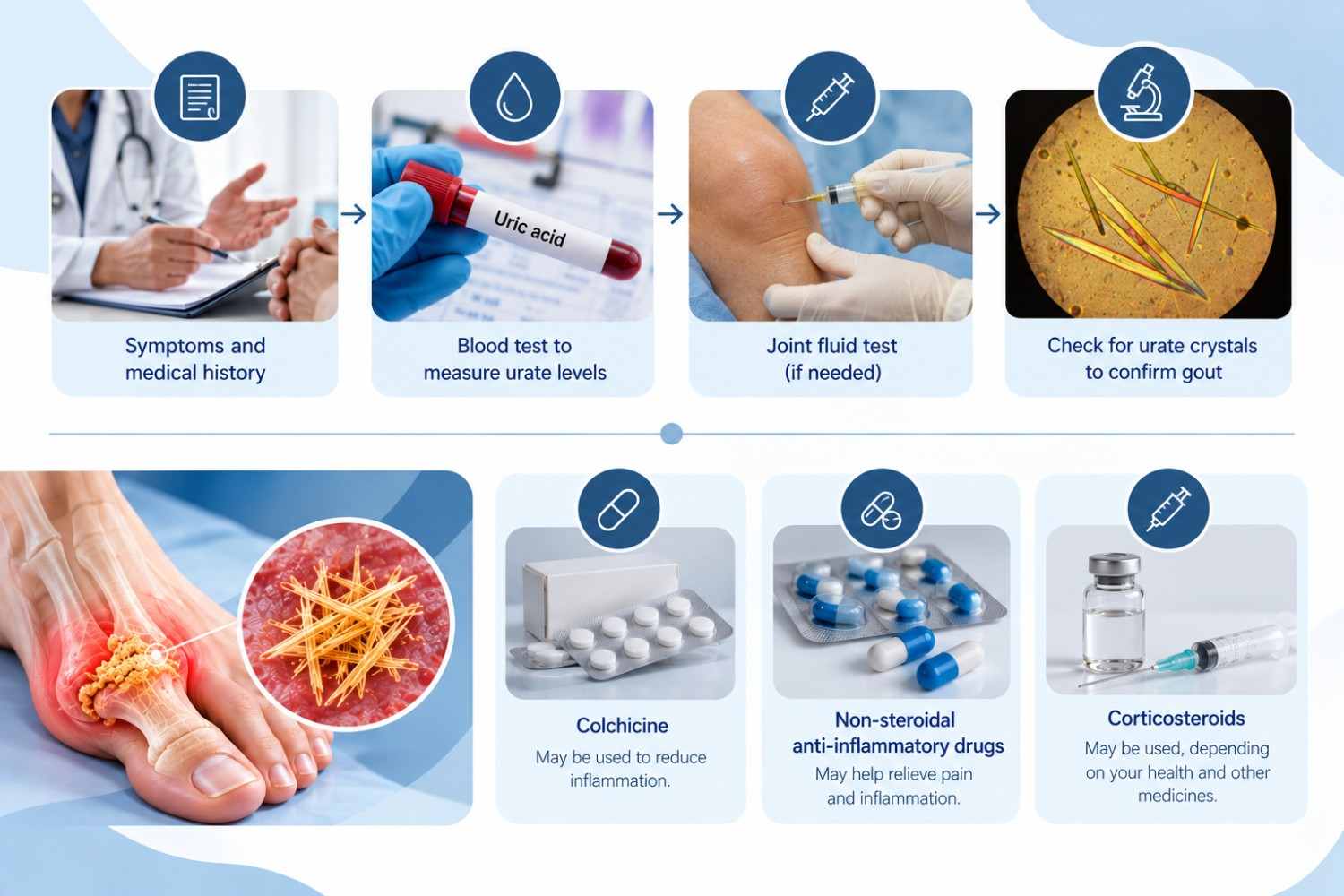
Your doctor will look at your symptoms, medical history and the affected joint. A blood test can measure urate levels, but that result is not enough on its own to confirm gout.
How Do Doctors Diagnose Gout?
When the diagnosis is unclear, your doctor may take a small amount of fluid from the affected joint and have it checked for urate crystals. This can help confirm whether gout is behind the symptoms.
A doctor may also need to rule out other causes of a painful, swollen joint, including an infection.
What Treatment Helps During a Gout Flare?
The main aim during an attack is to bring down the inflammation and make the pain easier to manage. Medicines such as colchicine, non-steroidal anti-inflammatory drugs and corticosteroids may be used, depending on your health and other medicines.
Treatment | What it is used for |
Colchicine | Helps control inflammation during an attack |
NSAIDs | Can reduce pain and inflammation |
Corticosteroids | May be used when other treatments are not suitable |
Urate-lowering medicine | Helps control urate levels over time |
The same treatment will not suit everyone. Your kidney function, other health conditions and medicines you already take can all affect what your doctor recommends.
How Can You Manage Gout Over Time?

Getting through one painful attack is only part of managing gout. If attacks keep happening, your doctor may discuss Gout treatment to bring urate levels down and prevent new crystals from forming.
How Can You Reduce Future Gout Flares?
Some people need long-term medicine such as allopurinol to keep urate levels under control. Regular blood tests may also be used to check whether treatment is working as intended.
Your doctor may also ask about your alcohol intake, diet, weight, other medicines and existing health conditions. These details can help build a treatment plan that fits your situation.
For people looking for an expat clinic, GP clinic or Orchard clinic, a medical assessment can help establish whether recurring joint pain is actually gout and whether longer-term treatment should be considered.
When Should You See a Doctor About Gout?
Get medical advice if you have your first unexplained episode of severe joint pain and swelling, or if the attacks are happening repeatedly.
Do not ignore a painful, swollen joint if you also have a fever or feel unwell. A joint infection can look a lot like gout but needs urgent medical treatment.
An expat clinic, GP clinic or Orchard clinic can be a starting point for an assessment if you are unsure what is causing your symptoms.
CHI Health can assess your symptoms, review your medical history and discuss the treatment options that may be suitable for you. If you are dealing with a gout flare, getting it assessed can also help rule out other causes of sudden joint pain.